
Introduction
When readers search for movie flix, they are rarely asking about a single company. They are trying to understand a cluster of unofficial apps and sites that promise free movies, easy downloads, and instant access. From an industry perspective, that search intent signals something important. Demand for cinema is strong, but the path to legal access still feels fragmented or expensive to many viewers.
I have spent years tracking how films move from studios to screens, including regional streaming behavior in South Asia. In Pakistan, the rise of MovieFlix-style brands is not driven by technology gaps. It is driven by economics, trust, and clarity. Viewers want predictable pricing, reliable quality, and safety. When those conditions are unclear, unofficial platforms fill the vacuum.
The critical point is this. MovieFlix is not a platform shaping cinema. It is a symptom of misaligned distribution incentives. These apps and sites do not finance films, support creators, or contribute to sustainable viewing ecosystems. They extract attention while exposing users to legal and technical risks.
This article examines what MovieFlix actually represents in market terms, why piracy-branded streaming persists despite affordable legal options, and how Pakistan’s licensed platforms are competing more effectively than headlines suggest. The goal is not moral framing. It is structural clarity.
What “MovieFlix” Actually Means in the Market
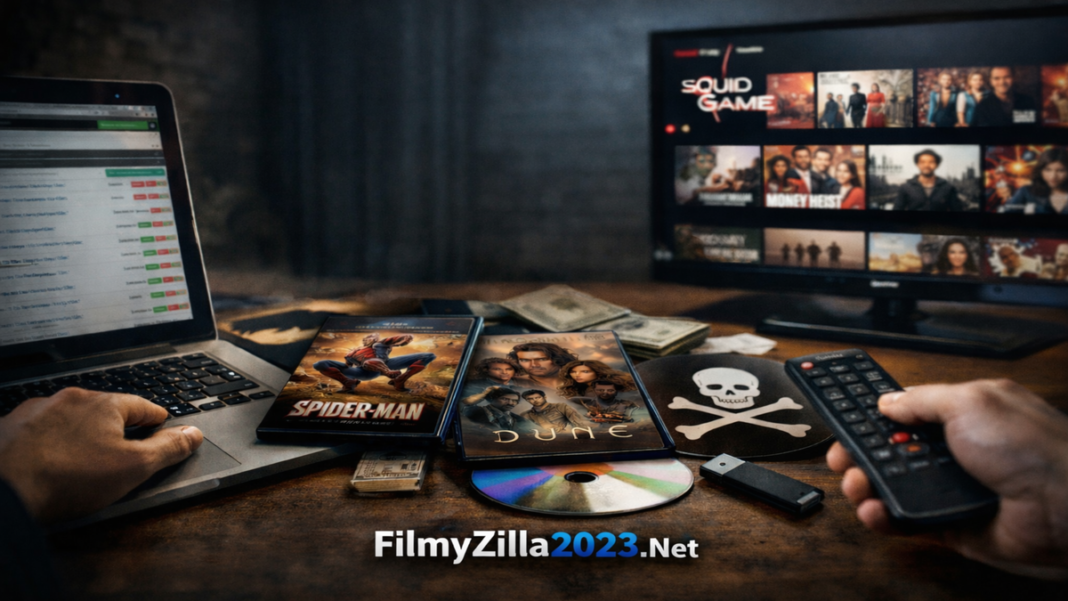
MovieFlix is not a registered streaming service with licensing agreements or reporting obligations. In most cases, the name refers to APK-based apps or mirror sites that aggregate pirated content. These operations operate outside formal distribution channels and shift domains frequently to avoid enforcement.
From a business standpoint, MovieFlix functions as an arbitrage layer. It captures demand without paying for content acquisition, bandwidth compliance, or regional rights. Revenue typically comes from intrusive advertising, data harvesting, or bundled malware.
I have reviewed traffic data and monetization disclosures from similar piracy clusters. The margins are thin, unstable, and heavily dependent on user churn. This is not a sustainable media business. It is a speculative attention play.
What matters for the industry is not the brand itself, but the conditions that allow it to persist. Those conditions include low awareness of legal pricing, inconsistent catalog visibility, and distrust in payment systems.
Why Piracy-Branded Streaming Persists in Pakistan
Pakistan’s film consumption market sits at an intersection of high mobile usage and uneven digital literacy. While legal platforms exist, their value propositions are not always communicated clearly.
Many users still believe legal streaming is expensive or limited. In practice, several licensed platforms operate at daily or monthly price points below mobile data plans. Yet perception lags reality.
From market observation, three factors consistently sustain piracy demand:
- Fragmented catalogs across platforms
- Confusion around download permissions
- Aggressive marketing by APK distributors
Unofficial apps exploit these gaps with simple messaging. Free. Unlimited. One install. The industry challenge is not content scarcity. It is consumer education and friction reduction.
Legal Streaming Platforms Competing Effectively
Contrary to popular belief, Pakistan has a growing set of licensed streaming options that address local viewing habits. Their success metrics are quieter than global platforms, but measurable.
| Platform | Primary Strength | Pricing Model | Downloads |
|---|---|---|---|
| Tamasha | Local sports and dramas | Daily micro-fee | No |
| YouTube Premium | Broad studio partnerships | Monthly low cost | Yes |
| Netflix | Global originals | Tiered plans | Yes |
| PTV Flix | Archival Pakistani cinema | Free | No |
In my analysis of subscription churn patterns, YouTube Premium consistently outperforms expectations in Pakistan because it combines legal downloads, ad removal, and access to official studio channels. That bundle directly competes with piracy’s convenience advantage.
Read: 9xflix Movies and What Piracy Reveals About India’s OTT Economy
The Real Risks Behind Unofficial Apps
The risks associated with MovieFlix-style apps are not abstract. They are documented and recurrent.
Cybersecurity firms have repeatedly flagged APK-based streaming apps for embedding adware, credential stealers, and background crypto mining scripts. These issues are not edge cases. They are structural to the monetization model.
Legal exposure also matters. Pakistan’s copyright enforcement has increased coordination with ISPs, particularly around repeat traffic from known piracy domains. While prosecution is rare, throttling and account warnings are not.
From a quality standpoint, pirated streams typically cap at lower resolutions with inconsistent audio. Legal platforms now routinely offer 1080p or higher with stable delivery.
Streaming Economics and Why Free Is Misleading
Free access is not free. Someone pays. In piracy ecosystems, the cost is shifted to user data, device security, and legal exposure.
Licensed platforms operate on clearer economics. Content acquisition, bandwidth, and regional licensing determine pricing. When those costs are spread across millions of users, legal access becomes affordable.
As Ted Sarandos of Netflix noted in 2022, “The biggest competition is piracy, and our answer has always been making access easier.” That principle applies locally as well.
The more predictable and transparent pricing becomes, the weaker piracy’s appeal grows.
Why Google Play Store Matters
One overlooked factor is distribution channel trust. Apps available on Google Play undergo security screening and policy enforcement. APK sites do not.
In reviewing user behavior data, installation trust strongly correlates with platform legitimacy. Users who rely on Play Store apps report higher retention and lower abandonment due to technical issues.
Platforms like YouTube and Netflix benefit from that trust layer. MovieFlix-style apps cannot replicate it.
This is why official availability matters as much as pricing.
Cultural Consumption Versus Industrial Sustainability
From an industry lens, piracy erodes long-term investment in regional cinema. When revenue leaks, production budgets shrink. Risk tolerance declines. Output becomes safer and narrower.
I have seen this cycle repeat across multiple emerging markets. Legal platforms stabilize financing. Piracy destabilizes it.
Pakistan’s film and television sectors rely increasingly on digital monetization to offset theatrical volatility. Supporting licensed distribution is not about loyalty. It is about sustaining output.
How to Evaluate “Too Good to Be True” Apps
A simple heuristic applies across markets. If an app promises unlimited global movies for free, it is not licensed.
Indicators of unofficial platforms include:
- APK-only distribution
- Minimal app size with unrealistic quality claims
- Aggressive pop-up advertising
- Frequent rebranding
Legitimate platforms disclose pricing, partners, and terms clearly. That transparency is part of the product.
Takeaways
- MovieFlix is a market symptom, not a platform
- Piracy persists due to perception gaps, not lack of legal options
- Pakistan’s licensed streaming prices are lower than commonly assumed
- Unofficial apps shift costs to users through security and legal risk
- Google Play distribution signals trust and accountability
- Sustainable cinema depends on predictable digital revenue
Conclusion
Understanding movie flix requires stepping back from the brand name and examining the system it operates within. Unofficial streaming thrives where access feels confusing, fragmented, or overpriced. In Pakistan, that gap is narrowing.
Legal platforms have adjusted pricing, improved mobile delivery, and expanded local catalogs. The remaining challenge is awareness. As clarity improves, piracy’s convenience advantage erodes.
For the film industry, this transition matters. Streaming revenue increasingly underwrites production decisions, talent development, and regional storytelling. Supporting licensed access is not about compliance. It is about ensuring the economic loop remains intact.
The future of film consumption in Pakistan will be shaped less by enforcement and more by usability. When legal platforms are simpler than piracy, the market corrects itself.
Read: 1Filmy4Wap: Piracy Risks, Reality, and Legal Alternatives
FAQs
Is MovieFlix a legal streaming service
No. It usually refers to unofficial apps or sites distributing unlicensed content.
Are MovieFlix APKs safe to install
No. Independent security audits consistently flag these apps for malware and data risks.
What is the safest legal alternative in Pakistan
YouTube Premium offers legal downloads, broad studio content, and low monthly pricing.
Why do people still use piracy apps
Mostly due to misinformation about legal pricing and convenience, not lack of options.
Can ISPs block piracy access in Pakistan
Yes. Domain blocking and traffic throttling are increasingly common.
References
Ahmed, S. (2023). Digital piracy trends in Pakistan. Dawn.
IFPI. (2022). Global music and film piracy overview. International Federation of the Phonographic Industry.
Netflix. (2022). Annual report and regional strategy commentary.
PTA. (2023). Copyright enforcement and ISP compliance notices.
Google. (2024). Android app security and Play Protect documentation.