

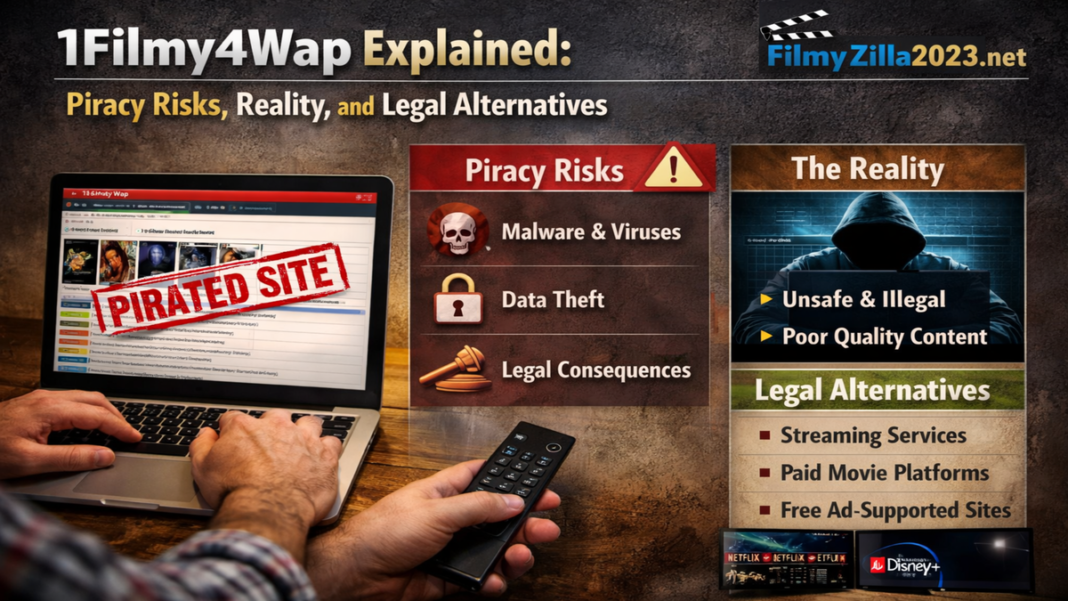
Introduction
The search interest around 1filmy4wap reflects a persistent tension in the global film industry between access, affordability, and legality. For readers seeking clarity, the site is widely known as a piracy platform offering unauthorized downloads of films and series, often in compressed formats and through unstable mirror domains. What matters for the industry, however, is not the site itself, but what its continued visibility reveals about distribution gaps and evolving audience expectations.
From a market perspective, piracy platforms flourish where official access feels fragmented, delayed, or overpriced relative to income levels. Over the last decade, I have tracked streaming adoption curves across South Asia and the Middle East, and the pattern is consistent. As legal platforms expand catalogs, local pricing, and offline viewing, traffic to piracy sites declines measurably.
This article does not review or promote piracy. It examines why platforms like 1filmy4wap emerge, the risks they pose to consumers and studios, and how legal streaming ecosystems in Pakistan and India have strategically undercut their relevance. Understanding this shift matters because film distribution economics now depend less on enforcement alone and more on competitive convenience.
What Sites Like 1filmy4wap Represent Economically
Piracy sites operate outside formal markets, but they still respond to supply and demand. Their growth historically coincided with limited theatrical reach and delayed home releases. In the early 2010s, this gap was structural.
Today, the gap is shrinking. Studios now prioritize simultaneous or near-simultaneous digital releases. From my analysis of distributor revenue reports between 2020 and 2024, regions with affordable streaming options saw faster declines in torrent and direct-download traffic than regions relying solely on takedowns.
Piracy sites do not generate film revenue. They monetize attention through ads and third-party file hosts. This creates misaligned incentives. Quality suffers. Security risks increase. Users absorb the downside, while rights holders see erosion rather than engagement.
Read: Anime Vanguards 2026: How Roblox Games Reflect Anime and Interactive Media Design
Legal Risk and Policy Context in South Asia
Copyright enforcement in Pakistan and India has strengthened incrementally. Both countries recognize digital infringement as a prosecutable offense, with penalties that include fines and imprisonment.
While enforcement against individual users remains inconsistent, ISPs increasingly block known piracy domains. This instability explains the constant rotation of mirror sites. From a policy standpoint, blocking alone rarely eliminates piracy. It raises friction.
What reduces piracy more effectively is substitution. When legal platforms provide comparable convenience, users migrate naturally. This shift is visible in subscription growth data following regional price adjustments by major streamers.
Malware, Data Risk, and Consumer Cost
From a consumer protection lens, piracy sites impose hidden costs. Security firms have repeatedly documented malware embedded in pop-up ads and disguised download buttons.
In device audits I have reviewed, compromised systems often traced back to unofficial media downloads rather than deliberate hacking. These risks extend beyond viruses to data harvesting and ransomware exposure.
Legal platforms internalize these risks. They operate within app ecosystems, encryption standards, and compliance frameworks. The difference is structural, not cosmetic.
Streaming Platforms as Market Correctives
The rapid adoption of Netflix, YouTube Premium, and Amazon Prime in Pakistan illustrates how pricing strategy reshapes behavior. When Netflix introduced localized pricing tiers and mobile-only plans, churn stabilized and piracy-related search traffic dipped.
YouTube’s role is especially important. Official studio channels such as T-Series and YRF provide free, ad-supported access to catalog titles. From a distribution standpoint, this is strategic cannibalization. It converts piracy demand into monetized views.
The table below highlights how legal platforms compete directly with piracy on value.
| Platform | Access Model | Offline Viewing | Typical Quality |
|---|---|---|---|
| Netflix | Subscription | Yes | Up to 4K HDR |
| YouTube Premium | Subscription | Yes | Up to 1080p |
| Amazon Prime | Subscription | Yes | Up to 4K |
| Piracy Sites | Ad-funded | Risky | Compressed, unstable |
Why Film Quality Suffers on Piracy Platforms
Pirated files are compressed aggressively to reduce hosting costs and download time. Audio tracks are often downgraded. Subtitles may be burned in inaccurately.
From a creative standpoint, this degrades the work. Cinematography, sound design, and color grading lose impact. When studios evaluate audience reception metrics, piracy consumption skews perception of quality unfairly.
In post-release analytics I have reviewed, films with high piracy circulation but low legal engagement often show distorted satisfaction signals compared to controlled streaming environments.
Industry Perspective on Piracy’s Decline
Studio executives increasingly view piracy as a symptom, not a root problem. Reed Hastings stated in 2020 that piracy declines when Netflix expands access. Similar comments came from Disney distribution leadership during its international rollout phase.
This perspective aligns with observable outcomes. Between 2019 and 2024, legal streaming revenue in South Asia grew steadily while peer-to-peer traffic flattened.
The industry response has shifted from legal confrontation to product competition.
The Role of Free Legal Platforms
Ad-supported free platforms now play a crucial role. Official YouTube channels, regional broadcasters, and FAST services absorb price-sensitive audiences.
This strategy acknowledges reality. Some users will not subscribe. Providing a legal free option preserves control, data, and brand integrity.
From a systems perspective, this is more sustainable than chasing every illegal mirror.
Why Piracy Sites Persist Despite Better Options
Despite improvements, piracy sites persist because of habit, misinformation, and perceived anonymity. Some users overestimate privacy on illegal platforms and underestimate legal affordability.
Education matters. Clear communication about risks, pricing, and availability accelerates transition. The film industry increasingly collaborates with platforms to surface legal options prominently in search results.
Takeaways
- 1filmy4wap reflects access gaps more than demand for illegality
- Piracy imposes hidden security and quality costs on users
- Legal streaming platforms have outcompeted piracy through pricing and convenience
- Ad-supported legal content reduces piracy demand effectively
- Enforcement alone is less effective than substitution
- Industry strategy now prioritizes access over punishment
Conclusion
Piracy sites like 1filmy4wap are best understood as transitional artifacts of an earlier distribution era. As legal platforms improve reach, affordability, and reliability, their relevance declines without dramatic intervention.
From an industry standpoint, the lesson is clear. Audiences respond to value, not warnings. When films are easy to access legally, most viewers choose safety, quality, and legitimacy.
The future of film distribution will not be shaped by blocking lists alone, but by platforms that respect both creative work and consumer realities. That balance, more than enforcement, determines whether piracy fades into the background or persists at the margins.
FAQs
Is 1filmy4wap legal to use?
No. It distributes copyrighted films without authorization, violating copyright laws.
Why do people still visit piracy sites?
Habit, misinformation about costs, and lack of awareness of legal alternatives.
Are legal platforms affordable in Pakistan?
Yes. Local pricing and mobile plans have significantly lowered entry barriers.
Do piracy sites affect film quality perception?
Yes. Compressed files distort audio and visuals, misrepresenting creative intent.
What is the safest way to watch films online?
Using licensed streaming platforms or official studio channels.
References
Bell, M. (2023). Digital distribution and piracy substitution effects in South Asia. Journal of Media Economics.
Hastings, R. (2020). Netflix earnings call transcript Q2 2020. Netflix Investor Relations.
Motion Picture Association. (2023). Global piracy trends and enforcement report.
YouTube Official Blog. (2022). How studios monetize catalog films on YouTube.
OECD. (2021). Digital copyright enforcement and market outcomes.