

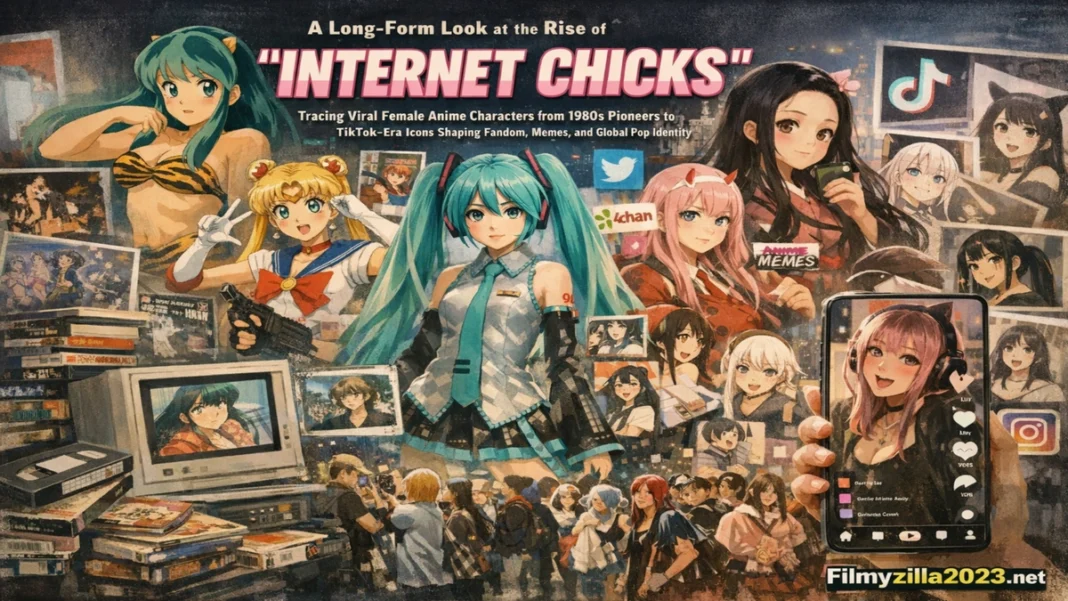
I have spent years watching how certain female anime characters escape the boundaries of their shows and become something larger, more communal, and unmistakably internet-born. When people use the phrase “internet chicks,” they are rarely talking about a single fandom or genre. They are describing a phenomenon: female anime characters who dominate timelines, inspire endless fan art, spark debates, and anchor entire online identities.
Within the first moments of searching the term, intent becomes clear. Readers want to know who these characters are, where they came from, and why they hold such power online. The answer lies not only in character design, but in timing, technology, and collective participation. From message boards and scanlated magazines to TikTok edits and algorithm-driven trends, these characters evolved alongside the internet itself.
“Internet chicks” are not just admired. They are remixed, argued over, ranked, and reinterpreted across generations. A character like Makima does not simply exist in her narrative world. She exists in millions of edits, reaction videos, cosplay reels, and fan theories. The same can be said for Yor Forger, whose blend of domestic comedy and lethal competence fuels constant debate about strength, motherhood, and fantasy.
This article traces the evolution of internet-famous female anime characters from the 1980s to today, examining why certain archetypes endure, how seasonal anime cycles drive viral attention, and what these characters reveal about online culture itself.
Defining “Internet Chicks” in Anime Culture
The phrase “internet chicks” is informal, but its meaning is precise. It refers to female anime characters who achieve sustained online prominence beyond their original series. These characters dominate memes, polls, edits, and fan communities, often becoming symbols of broader emotional or aesthetic ideals.
What distinguishes them is scale and persistence. Many anime characters are popular during a show’s release window. Internet chicks remain relevant years later, resurfacing with every platform shift. Their appeal is amplified by visual clarity, emotionally charged scenes, and personalities that invite projection.
Anime historian Jonathan Clements has noted that fandom has always been participatory, but digital platforms intensified this engagement by removing barriers between creator, viewer, and community. The internet chick thrives in that environment because she is endlessly reusable. She can be serious or ironic, empowering or controversial, depending on how fans frame her.
Importantly, these characters are not passive objects. Many represent power, danger, intellect, or emotional depth. Their popularity often reflects changing conversations around gender, agency, and fantasy in online spaces.
1980s Foundations: Before the Internet Went Mainstream
The roots of internet chicks predate the modern internet. In the early 1980s, anime magazines, VHS trading, and fan clubs created proto-viral culture. Characters circulated through print, posters, and convention lore.
One of the earliest examples is Lum Invader, who debuted in 1981. Her tiger-striped bikini and mischievous personality established a visual and personality template that would echo for decades. Lum was playful, assertive, and visually iconic, traits that later defined online favorites.
Another foundational figure is Bulma, introduced in 1986. Unlike many contemporaries, Bulma combined intelligence, humor, and sexuality without being sidelined. Her long-running presence allowed multiple generations to reinterpret her appeal.
These characters spread through early fandom networks, proving that visual distinction and personality mattered long before algorithms amplified reach.
1990s Icons and the Birth of Waifu Discourse
The 1990s marked a turning point as internet access expanded and anime fandom moved online. Message boards, IRC chats, and early websites became battlegrounds for character loyalty.
Few characters embody this era more than Rei Ayanami and Asuka Langley Soryu. Introduced in Neon Genesis Evangelion in 1995, they sparked debates that still shape fandom language today. Reserved versus explosive. Silent versus confrontational. Fans did not just watch these characters. They argued over them as reflections of personal identity.
At the same time, Usagi Tsukino became a global icon. Her clumsiness, kindness, and transformation scenes fueled cosplay culture and expanded anime’s reach among young women and queer audiences worldwide.
This decade cemented the idea that female characters could anchor entire online communities.
2000s Acceleration: YouTube, Forums, and Visual Virality
The 2000s brought broadband, image boards, and early video platforms, accelerating the spread of anime characters online. Clips, GIFs, and AMVs turned characters into shareable media units.
Haruhi Suzumiya, introduced in 2006, thrived in this environment. Her unpredictable authority and self-awareness mirrored internet chaos itself. Dance sequences and dialogue clips spread rapidly, embedding her into early meme culture.
Shortly after, Yoko Littner became synonymous with bold design and confidence. Her visual presence dominated forums and cosplay galleries, illustrating how striking aesthetics could sustain long-term relevance.
| Era | Platform Shift | Defining Characters |
|---|---|---|
| 1980s | Print and VHS | Lum, Bulma |
| 1990s | Forums and IRC | Rei, Asuka, Usagi |
| 2000s | YouTube, image boards | Haruhi, Yoko |
2010s to Present: Social Media and Algorithmic Fame
By the 2010s, social media platforms transformed fandom into a feedback loop. Characters rose and fell based on engagement metrics, not just narrative impact.
Makima, debuting in 2022, exemplifies this era. Her calm menace, moral ambiguity, and carefully framed scenes fueled endless edits and debates. TikTok algorithms amplified her presence far beyond the manga readership.
Similarly, Power gained popularity through chaos and humor, thriving in meme formats that reward unpredictability.
Meanwhile, Yor Forger captured a different mood. Her dual role as assassin and mother resonated across demographics, generating wholesome memes alongside action edits.
Media scholar Susan Napier has argued that modern anime fandom blurs irony and sincerity. Internet chicks exist comfortably in that space, loved both genuinely and playfully.
Seasonal Cycles and Viral Peaks
Anime releases follow seasonal schedules, and internet popularity often peaks accordingly. New characters emerge, while older ones resurface through nostalgia and remakes.
| Season | Common Archetype | Notable Examples |
|---|---|---|
| Winter | Elegant, reflective | Frieren |
| Spring | High-energy fighters | Yor Forger, Makima |
| Summer | Bold designs | Mirko, Yoko |
| Fall | Fantasy icons | Frieren, Zero Two |
This cyclical nature ensures the internet chick phenomenon never truly fades. It evolves, refreshes, and recontextualizes itself.
Why These Characters Endure
Three elements consistently drive long-term online relevance. First is visual clarity. A character must be recognizable in a single frame. Second is emotional contradiction. Characters who balance strength and vulnerability invite discussion. Third is remix potential. The internet rewards characters who can be reinterpreted endlessly.
Cultural critic Anne Allison has noted that anime characters function as emotional interfaces, allowing fans to process identity, desire, and belonging. Internet chicks persist because they adapt to new platforms while retaining core appeal.
Takeaways
- Internet chicks are defined by sustained online relevance, not short-term popularity.
- Visual design and emotional complexity drive viral longevity.
- Each internet era reshapes how characters are shared and debated.
- Seasonal anime releases fuel recurring popularity cycles.
- Modern platforms amplify remix culture over narrative context.
- These characters reflect broader shifts in digital identity and fandom.
Conclusion
The history of internet chicks is inseparable from the history of the internet itself. As platforms evolved from message boards to TikTok feeds, female anime characters adapted seamlessly, becoming symbols of taste, humor, desire, and debate.
What makes these characters endure is not just design or writing, but participation. Fans do not passively consume them. They build culture around them. They argue, reinterpret, and reintroduce them to new generations.
In that sense, internet chicks are less about individual characters and more about collective imagination. They reveal how storytelling, technology, and community intersect in the digital age. As long as anime continues to evolve alongside the internet, new icons will rise, but they will always stand on the foundation laid by those who came before.
Click Here To Know More About History Archive!
FAQs
What does “internet chicks” mean in anime fandom
It refers to female anime characters who achieve viral, long-term popularity across online platforms.
Are internet chicks only recent characters
No. The phenomenon dates back to the 1980s, though modern platforms amplify it.
Why do certain characters go viral
Strong visual identity, emotional depth, and remix potential drive popularity.
Do memes reduce character depth
Often the opposite. Memes keep characters relevant and invite new interpretations.
Will the trend continue
Yes. As long as anime and online communities coexist, new internet icons will emerge.